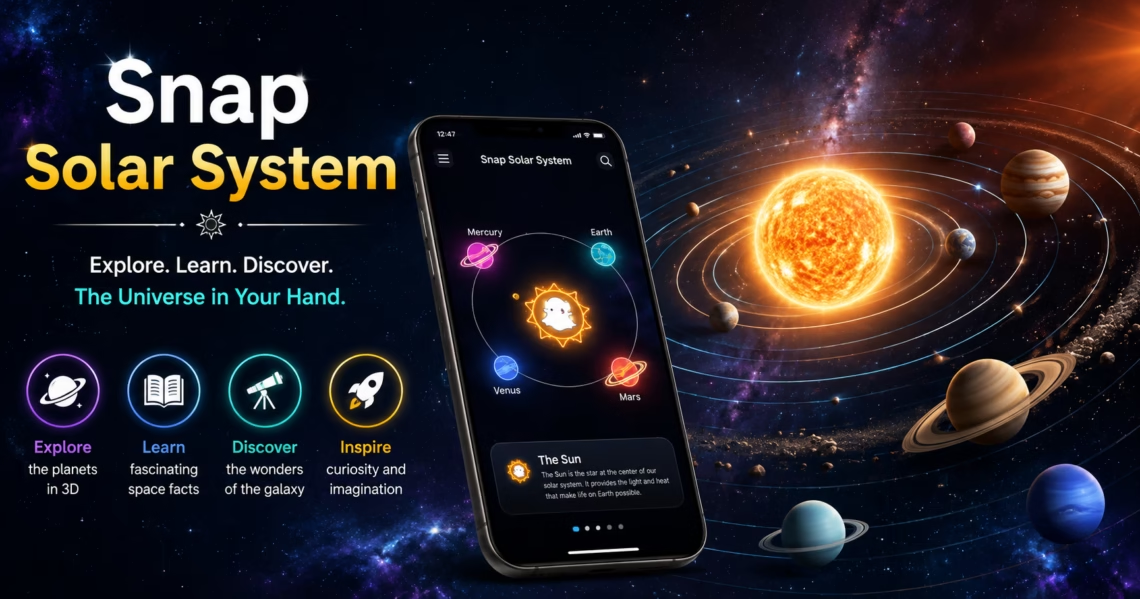
The Snap Solar System is a Snapchat+ feature that turns your closest Snapchat friendships into a visual arrangement of planets. Each planet represents a position in a person’s Best Friends list, making it easier to understand where you stand among the people they interact with most on Snapchat. The feature is also known as Snapchat Planets or Friend Solar System.
If you have ever opened a friend’s Snapchat profile and noticed a planet beside your Bitmoji, you might have wondered what it means. Does Mercury mean you are their closest friend? Is Neptune a bad sign? Can you change your planet, and do you need Snapchat+ to see it?
The answers are simpler than they might seem. Snapchat uses eight planets, from Mercury to Neptune, to represent eight positions in a friend’s Best Friends list. The closer the planet is to the Sun, the higher the position it represents. However, this ranking reflects activity on Snapchat rather than the complete value of a real-life friendship.
In this guide, you will learn what the Snap Solar System means, how all eight planets work, how to find your planet, how to enable the feature, and what to do if it does not appear. You will also discover its benefits, limitations, privacy considerations, and whether Snapchat+ is worth purchasing for this feature.
What Is the Snap Solar System?
The Snap Solar System is a friendship-ranking feature available to Snapchat+ subscribers. It represents the way people interact on Snapchat through a miniature solar system, with one person represented by the Sun and the other person’s Bitmoji appearing as a planet.
The feature is officially known as Friend Solar System. Many users call it Snap Solar System, Snapchat Solar System, or Snapchat Planets because planets are the main visual element.
The basic concept is straightforward. Snapchat identifies the eight friends someone interacts with most frequently through Snaps and chats. These friends occupy positions represented by Mercury, Venus, Earth, Mars, Jupiter, Saturn, Uranus, and Neptune.
For example, imagine that you frequently exchange Snaps and messages with a particular friend. When you view your position in that person’s Solar System, you might appear as Mercury. This indicates that you occupy the first position in their Best Friends list.
If you appear as Jupiter, you occupy the fifth position. If you appear as Neptune, you occupy the eighth position.
The feature provides a visual representation of your Snapchat interactions rather than a complete picture of your personal relationship.
It is important to understand that the Solar System is optional. Snapchat has made it disabled by default for first-time subscribers, so having Snapchat+ does not automatically mean the feature is turned on.
Snapchat Planets in Order
The Snapchat Solar System follows the same planetary sequence as the familiar solar system. Mercury is closest to the Sun, while Neptune is the farthest of the eight planets used in this feature.
Here is the complete Snap Solar System order:
| Planet | Position | Meaning |
| Mercury | 1st | Closest friend in the list |
| Venus | 2nd | Second position |
| Earth | 3rd | Third position |
| Mars | 4th | Fourth position |
| Jupiter | 5th | Fifth position |
| Saturn | 6th | Sixth position |
| Uranus | 7th | Seventh position |
| Neptune | 8th | Eighth position |
The easiest way to remember the order is to follow the real planetary sequence:
Mercury, Venus, Earth, Mars, Jupiter, Saturn, Uranus, Neptune.
The first planet represents the highest position, and the eighth planet represents the last position in the top-eight list.
These positions are not permanent labels. Your position can change as your Snapchat interactions change. Someone who appears as Venus today might appear as Mars or Jupiter later.
The ranking also works independently for each person. You could appear as Mercury in one friend’s Solar System while that same friend appears as Saturn in yours. This is possible because your positions are determined separately.
What Does Each Snap Planet Mean?
Every planet has a specific position in the Friend Solar System. Understanding the meaning of each planet helps you interpret the feature without confusing it with a measure of personal loyalty or emotional closeness.
1. Mercury: Your Number One Friend
Mercury represents the first position in the Snapchat Solar System. If you appear as Mercury in someone’s Solar System, you occupy the highest position in their Best Friends list.
In simple terms, you are the person ranked first among the eight friends represented by this feature.
This position may reflect frequent Snaps, regular conversations, and other patterns of interaction. It can be exciting to discover that you appear as Mercury, particularly when the person is a close friend, partner, or family member.
However, Mercury does not guarantee that you are someone’s closest friend in every aspect of life. Snapchat measures activity within its platform, not every conversation or experience you share outside it.
Meaning: You are ranked number one in that person’s Snapchat Best Friends list.
2. Venus: Your Second Position
Venus represents the second position in the Snap Solar System.
If your Bitmoji appears as Venus, you are ranked second among the eight friends represented in that person’s Solar System.
You may communicate regularly, share photos, respond to each other’s messages, or maintain an active conversation. Nevertheless, the planet does not explain exactly why Snapchat assigned you that position.
A Venus ranking is not a negative result. It simply means that one position appears ahead of yours in that person’s current ranking.
Meaning: You are ranked number two in that person’s Snapchat Best Friends list.
3. Earth: Your Third Position
Earth represents the third position in the Snapchat planet order.
If you appear as Earth, you occupy the third position in the other person’s Solar System. The Earth Friendmoji may include recognizable details associated with the planet, such as its colors and Moon.
This planet can be useful when you want to understand where you appear among a friend’s most frequently contacted people. It does not mean that the friendship is less meaningful than a Mercury or Venus connection.
For instance, you might be someone else’s third most frequently contacted friend on Snapchat while being their closest friend outside the app.
Meaning: You are ranked number three in that person’s Snapchat Best Friends list.
4. Mars: Your Fourth Position
Mars represents the fourth position in the Snap Solar System.
If you see Mars when checking your planet, you are ranked fourth among the eight friends represented in that person’s Best Friends list.
This position can change when interaction patterns change. A friend who communicates more frequently with you over time might appear higher in your Solar System, while a change in activity across your wider friend group can affect relative positions.
Mars is simply a ranking indicator. It does not mean that your friendship is weak or that the other person is intentionally ignoring you.
Meaning: You are ranked number four in that person’s Snapchat Best Friends list.
5. Jupiter: Your Fifth Position
Jupiter represents the fifth position in the Snapchat Solar System.
If your planet is Jupiter, you are the fifth person in that friend’s top-eight ranking.
You might still exchange Snaps, share updates, or have regular conversations. The ranking only shows that four positions appear ahead of yours in that particular list.
It is also possible for someone to have a strong real-life relationship with you while communicating more frequently with other people on Snapchat.
Meaning: You are ranked number five in that person’s Snapchat Best Friends list.
6. Saturn: Your Sixth Position
Saturn represents the sixth position in the planetary sequence.
If you appear as Saturn, you occupy the sixth position among the eight friends in that person’s Solar System.
The Saturn Friendmoji is visually recognizable because of the planet’s rings. However, its appearance does not change the meaning of the ranking.
You should interpret Saturn as information about your position within the app, not proof that the other person values you less as a friend.
Meaning: You are ranked number six in that person’s Snapchat Best Friends list.
7. Uranus: Your Seventh Position
Uranus represents the seventh position in the Snap Solar System.
If you appear as Uranus, you are seventh among the eight friends represented in the other person’s Solar System.
This may be useful information if you are curious about your Snapchat interaction patterns. However, it is not a complete measurement of how often someone thinks about you, how much they trust you, or how important you are in their life.
The feature cannot measure every meaningful interaction, particularly conversations that happen in person or through other communication platforms.
Meaning: You are ranked number seven in that person’s Snapchat Best Friends list.
8. Neptune: Your Eighth Position
Neptune represents the eighth and final position in the Snapchat Solar System.
If you appear as Neptune, you occupy the last position among the eight friends represented in that person’s Best Friends list.
Some users may interpret Neptune negatively because it is farthest from the Sun. However, being ranked eighth does not automatically mean that a friendship is unimportant or ending.
It simply identifies the lowest position within this particular top-eight ranking. The person may still care about you, enjoy spending time with you, and maintain a meaningful relationship outside Snapchat.
Meaning: You are ranked number eight in that person’s Snapchat Best Friends list.
How Does the Snap Solar System Work?
The Snap Solar System transforms Snapchat friendship rankings into a visual format.
When the feature is enabled, a person’s Solar System places that person at the center as the Sun. Your Bitmoji appears as a planet when you occupy a position in that person’s Best Friends list.
Snapchat describes Best Friends as the eight people a user Snaps and chats with most. The planet you see represents a different position in that list.
The important point is that your planet represents your position in another person’s Solar System, not necessarily your position in your own.
For example, consider two friends, Alex and Sam.
Alex may communicate more frequently with Sam than with most other people. Sam might therefore appear as Mercury in Alex’s Solar System.
However, Alex might be only the fifth person Sam interacts with most frequently. Alex could appear as Jupiter in Sam’s Solar System.
Both positions can exist at the same time because each person’s ranking is separate.
The feature is designed to provide additional context about Snapchat interactions. It does not reveal every person on someone’s friend list, nor does it provide a complete ranking of every relationship in their life.
How to Enable the Snap Solar System
If you have Snapchat+ but cannot see the Solar System feature, it may simply be switched off.
Snapchat keeps Friend Solar System disabled by default for first-time subscribers. You can enable it through the Snapchat+ feature controls.
Follow these steps:
- Open the Snapchat app on your phone.
- Tap your profile or Bitmoji icon.
- Open the Snapchat+ membership section.
- Look for the feature management settings.
- Find the Friend Solar System option.
- Turn the feature on if it is currently disabled.
- Return to your friends’ profiles and check whether the Solar System badge is available.
The exact menu labels and placement can vary depending on your app version and device.
If you cannot find the option, update Snapchat to the latest available version and reopen the app. Also confirm that your Snapchat+ subscription is active.
Enabling the feature does not mean that you will automatically see a planet beside every contact. You need to access an eligible Friendship Profile and check the relevant badge.
How to Check Your Planet in Someone’s Snap Solar System
Once the feature is enabled, you can check your position in a friend’s Solar System by opening their Friendship Profile.
Here is the process:
- Open Snapchat.
- Navigate to the friend whose Solar System you want to check.
- Open the person’s profile or Friendship Profile.
- Look for the gold-ring friendship badge.
- Tap the badge if it is available.
- Read the planet displayed for your position.
The planet indicates where you appear in that person’s Best Friends list.
For example, if you see Mercury, you occupy the first position. If you see Earth, you occupy the third position. If you see Neptune, you occupy the eighth position.
If the badge does not appear, do not immediately assume that the other person has removed you from their friends list. The feature may be disabled, your subscription may not support the required access, or the relevant friendship information may not be available.
Check your settings before drawing conclusions.
What Is the Difference Between the Friends and Best Friends Badges?
One of the most confusing aspects of the Snap Solar System is the difference between the Friends and Best Friends badges.
Although the labels look similar, they communicate different things about the friendship ranking.
Best Friends Badge
The Best Friends badge indicates that you are among the eight people the other person Snaps and chats with most frequently, and that the relationship is also represented in your own top-eight ranking.
In other words, you appear in each other’s top-eight Best Friends lists.
When the Solar System feature is available and enabled, tapping the badge can reveal your planet position.
Friends Badge
The Friends badge indicates that you appear in the other person’s top-eight ranking, but the other person does not appear in your own top-eight list.
For example, you might regularly send Snaps to someone who rarely initiates conversations with you. You could appear among their top eight friends without them appearing among yours.
This does not automatically mean that the person is deliberately ignoring you. People use Snapchat differently, and their communication patterns can vary.
Quick Comparison
| Feature | Friends badge | Best Friends badge |
| You appear in their top eight | Yes | Yes |
| They appear in your top eight | Not necessarily | Yes |
| Indicates mutual top-eight status | No | Yes |
| Can provide access to planet information | When eligible | When eligible |
The most important distinction is that a Best Friends badge indicates mutual top-eight status, while a Friends badge indicates that the ranking is not mutual.
Does the Snap Solar System Update Automatically?
Yes, your position can change as your Snapchat interaction patterns change.
The planets are not permanent assignments. If you communicate more frequently with one friend, your relative positions may change. Other people’s activity can also affect the order because the ranking depends on your position among their most frequently contacted friends.
For example, you might appear as Venus in someone’s Solar System one week and Mars later. That change does not necessarily indicate a disagreement or a sudden change in the person’s feelings.
It may simply reflect a difference in communication patterns.
Snapchat does not provide a universally guaranteed update schedule for every planet change. Therefore, claims that rankings always update after a specific number of hours should be treated cautiously.
If your position appears unchanged after a period of increased activity, give the app time to reflect changes and check again later.
What Determines Your Position in the Snap Solar System?
Snapchat identifies the people a user Snaps and chats with most frequently, then represents the top eight positions through the Friend Solar System.
The exact ranking formula is not publicly documented in sufficient detail to calculate your position manually.
It is reasonable to understand the feature as a reflection of Snapchat interaction patterns, but you should not assume that every activity has a specific, publicly confirmed numerical weight.
For example, maintaining a long Snapstreak does not guarantee Mercury status. You might exchange daily Snaps with someone while having more extensive conversations with other people.
Similarly, viewing someone’s story does not guarantee a higher ranking.
The following factors help explain why your ranking may not match your expectations:
- Communication habits: Some friends exchange messages or Snaps more frequently than others.
- Changing activity: Your usual communication patterns may change from week to week.
- Other friendships: Your position depends on the other people in the same ranking, not only on your activity with one friend.
- Different communication styles: Some people use Snapchat primarily for photos, while others use it for conversations.
- Platform limitations: Snapchat does not publish a complete formula that lets users predict exact planet assignments.
The safest interpretation is that the Solar System reflects activity within Snapchat rather than a complete measure of friendship quality.
How to Get a Better Position in the Snap Solar System
If you want to appear closer to the Sun in someone’s Solar System, focus on maintaining natural, meaningful communication rather than trying to manipulate a ranking.
There is no guaranteed method to become Mercury because Snapchat does not disclose an exact formula or promise a particular outcome.
However, these practical habits can help you maintain an active connection.
Communicate Naturally
Send Snaps and messages when you genuinely have something to share. A funny moment, an interesting photo, or a simple question can create a more natural conversation than repeatedly sending empty Snaps.
Respond to Conversations
If a friend sends you a message or asks a question, respond when you can. Two-way communication can help you stay connected without creating unnecessary pressure.
Maintain Your Friendship Outside Snapchat
Do not limit your relationship to the app. Calls, in-person conversations, shared activities, and other forms of communication can be more meaningful than a planet ranking.
Avoid Sending Unwanted Messages
Sending large numbers of unnecessary messages just to change a ranking is not a reliable strategy. It can also annoy the other person or make the friendship feel forced.
Be Patient With Changes
Planet positions are not guaranteed to change immediately after you start communicating more frequently. Check again later instead of repeatedly refreshing the app or worrying about small differences.
Ultimately, the best reason to communicate with someone is to enjoy the friendship, not to obtain a particular planet.
Why Is the Snap Solar System Not Showing?
If your Snap Solar System is missing, several explanations are possible. Most are related to subscription access, settings, profile eligibility, or app issues.
1. The Feature Is Disabled
This is one of the first things to check.
Snapchat+ subscribers may need to enable Friend Solar System manually because it is off by default for first-time subscribers.
Open your Snapchat+ feature management settings and check whether the option is enabled.
2. Your Snapchat+ Subscription Is Inactive
Friend Solar System is a Snapchat+ feature. If your subscription has expired or is not active on the account you are using, the feature may be unavailable.
Check your subscription status and confirm that you are logged into the correct Snapchat account.
3. You Are Checking the Wrong Profile Area
The planet information appears through the relevant Friendship Profile badge. It is not necessarily displayed directly beside every person’s name in the chat list.
Open the friend’s profile and look for the appropriate badge.
4. The Friendship Badge Is Missing
If you cannot see a Friends or Best Friends badge, the required friendship information may not be available for that profile.
Check whether you are viewing the correct account and whether the Solar System feature is enabled. Do not assume that the absence of a badge proves that someone has blocked or removed you.
5. Snapchat Needs an Update
An outdated app version can sometimes cause settings or features to behave differently.
Open your device’s app store, check for an available Snapchat update, and install it if needed.
6. A Temporary App Issue Is Occurring
Temporary glitches can affect profile information and other app features.
Try closing and reopening Snapchat. If the issue continues, restart your phone and check again.
You can also review the app’s cache settings and clear the cache if appropriate. Avoid deleting important saved data without first understanding what the action removes.
7. The Interface Has Changed
Snapchat regularly updates its interface and feature controls. Instructions based on an older version may not match your screen exactly.
Look for the Snapchat+ feature management area rather than relying on a specific button location from an older guide.
If the problem persists after these checks, consult Snapchat’s in-app support options.
Is the Snap Solar System Available on iPhone and Android?
The Snap Solar System is a Snapchat+ feature, not a feature exclusive to one phone manufacturer.
Eligible users may access it through Snapchat on supported iPhone and Android devices. However, the exact interface, settings placement, and appearance of the feature can differ between app versions.
On an iPhone, start by opening your Snapchat profile and checking the Snapchat+ membership controls.
On Android, follow the same general process: open your profile, enter the Snapchat+ section, and look for Friend Solar System in the available feature settings.
If the feature is missing on either device, check your subscription, app version, and settings before assuming that your phone is incompatible.
Can You See Someone’s Entire Snap Solar System?
No. The feature does not give you a complete list of another person’s friends or reveal every planet in their Solar System.
Instead, it provides information about your own position in that person’s ranking when the necessary conditions are met.
For example, if you appear as Mercury in a friend’s Solar System, that tells you that you occupy the first position in their Best Friends list. It does not reveal the identities of the people represented by Venus, Earth, Mars, or the other planets.
This distinction is important for privacy.
The feature is intended to provide limited context about a friendship rather than expose an individual’s complete social network.
You should not assume that tapping a friend’s badge will reveal all their Snapchat contacts, private conversations, or other personal information.
Is the Snap Solar System Private?
The Friend Solar System is designed as a private friendship feature rather than a public ranking board.
Snapchat has explained that the Solar System does not display the identities of the other friends in someone’s ranking. The feature is intended to show your position, not publish a complete list of another person’s closest contacts.
However, privacy and access should be understood carefully.
If you check your position in someone’s Solar System, you are viewing information that Snapchat makes available through the friendship interface. That does not mean you can inspect the person’s entire friend list or see every relationship they maintain.
You should also avoid sharing screenshots of another person’s friendship information without considering their privacy.
Most importantly, do not use the planet ranking to pressure someone into communicating more frequently. A feature that is intended to make friendships easier to understand should not become a source of unnecessary conflict.
Read more: TheJavaSea.me Leaks AIO-TLP370: Meaning, Risks, Facts, and Safety Guide
Does the Snap Solar System Show Real Friendship?
The Snap Solar System shows a ranking based on Snapchat interactions, but it cannot accurately measure the full strength of a friendship.
This is an important distinction because people often interpret digital indicators as if they were complete representations of personal relationships.
Imagine that you have a close friend who lives in another city. You might call each other every weekend and meet during holidays, but rarely exchange Snaps during the week.
Another person might send that friend dozens of messages each day because they work or study together.
The second person could occupy a higher position in the Solar System even if the first person has a deeper relationship with the friend outside the app.
The same situation can occur between romantic partners, siblings, classmates, and long-time friends.
A planet ranking cannot fully account for shared experiences, trust, support, personal history, or communication through other channels.
Therefore, it is best to treat the Solar System as an optional feature for exploring app activity rather than a definitive judgment about a relationship.
Is Snapchat+ Worth It for the Snap Solar System?
Whether Snapchat+ is worth paying for depends on how you use Snapchat and which features matter to you.
The Solar System may be an appealing extra for people who enjoy learning more about their Snapchat interactions. However, it is only one part of a paid subscription.
Reasons You Might Like It
- You enjoy exploring Snapchat’s friendship features.
- You want to see your position in an eligible friend’s Best Friends list.
- You like Bitmoji-based visual features.
- You regularly use Snapchat and want access to additional customization and premium options.
- You are curious about how your interactions compare over time.
Reasons You Might Not Need It
- You mainly use Snapchat to send occasional messages.
- You do not care about friendship rankings.
- You prefer not to compare your position with other people.
- You are satisfied with the features available on the free version.
- You do not want another recurring subscription.
What Should You Consider Before Paying?
Check the current Snapchat+ price displayed for your account and region before subscribing. Prices, available plans, promotions, and included features can change.
The Solar System alone may not justify a subscription if you rarely use the app. On the other hand, users who enjoy several Snapchat+ features may find the overall package more useful.
If you decide to subscribe, explore the available features before renewing. The best value comes from using the subscription for features you genuinely enjoy, rather than paying solely to achieve a higher friendship ranking.
Snap Solar System in India and the USA
The basic meaning of the Snap Solar System remains the same regardless of whether you use Snapchat in India or the United States.
Mercury represents the first position, Venus the second, Earth the third, and the sequence continues through Neptune in eighth place.
However, subscription prices, billing options, taxes, promotional offers, and payment methods can differ by region. Users should check the price and subscription details shown in their own Snapchat account.
The app’s interface may also change over time, so the exact location of the Snapchat+ controls may not be identical on every device.
If you are using Snapchat in India, check the subscription information and payment terms presented for your account. If you are in the USA, review the same details before purchasing.
Regardless of your location, remember that a planet represents a position in a Snapchat ranking, not a universal measure of friendship.
Common Misunderstandings About the Snap Solar System
Several misconceptions can make the feature more confusing than it needs to be.
Myth 1: Mercury Means You Are Someone’s Closest Friend in Real Life
Reality: Mercury means you occupy the first position in that person’s Snapchat Best Friends list. It does not measure every part of the relationship.
Myth 2: Neptune Means Someone Does Not Care About You
Reality: Neptune represents the eighth position in the ranking. It does not establish how someone feels about you.
Myth 3: A Long Snapstreak Guarantees Mercury
Reality: A Snapstreak does not guarantee a particular planet. Your position depends on the ranking, and Snapchat does not publish an exact formula for calculating it.
Myth 4: Your Planet Must Match Your Friend’s Planet
Reality: Rankings are independent. You might appear as Mercury in one person’s Solar System while that person appears as Jupiter in yours.
Myth 5: Everyone Can Use the Solar System for Free
Reality: Friend Solar System is a Snapchat+ feature. Access depends on the subscription and feature settings.
Myth 6: The Solar System Reveals Every Best Friend
Reality: The feature does not provide a complete list of the other people in someone’s Solar System.
Myth 7: Planet Positions Never Change
Reality: Rankings can change as interaction patterns change. A planet is not a permanent friendship status.
Understanding these points makes it easier to use the feature without making assumptions that Snapchat’s ranking cannot support.
Frequently Asked Questions About the Snap Solar System
What is the Snap Solar System?
The Snap Solar System is Snapchat’s Friend Solar System feature. It uses eight planets to represent positions in a person’s Best Friends list and is available to Snapchat+ subscribers.
What is the correct Snapchat planet order?
The correct order is Mercury, Venus, Earth, Mars, Jupiter, Saturn, Uranus, and Neptune. Mercury represents the first position, while Neptune represents the eighth.
What does Mercury mean on Snapchat?
Mercury means you occupy the first position in the other person’s Snapchat Best Friends list.
What does Venus mean on Snapchat?
Venus represents the second position in a person’s Best Friends list.
What does Earth mean on Snapchat?
Earth represents the third position in the Snap Solar System.
What does Mars mean on Snapchat?
Mars represents the fourth position in a person’s Best Friends list.
What does Jupiter mean on Snapchat?
Jupiter represents the fifth position in the Snapchat Solar System.
What does Saturn mean on Snapchat?
Saturn represents the sixth position in the ranking.
What does Uranus mean on Snapchat?
Uranus represents the seventh position in the Snap Solar System.
What does Neptune mean on Snapchat?
Neptune represents the eighth and final position in the Friend Solar System.
Do I need Snapchat+ to see Snapchat planets?
Yes. Friend Solar System is a Snapchat+ feature. You may also need to enable it in the Snapchat+ feature management settings.
Why is my Snap Solar System not showing?
The feature may be disabled, your subscription may be inactive, the relevant friendship badge may be unavailable, or the app may need an update. Check these possibilities before assuming that something has changed in your friendship.
Can I change my planet manually?
There is no standard setting that lets you directly select a planet for yourself. Your position is determined by your place in the other person’s Best Friends list.
Can I become Mercury on Snapchat?
You cannot directly assign yourself Mercury. Your position depends on your ranking in the other person’s Best Friends list, and Snapchat does not guarantee a particular outcome from specific actions.
Does Mercury mean someone likes me romantically?
No. Mercury represents the first position in a Snapchat friendship ranking. It does not indicate romantic attraction or confirm someone’s feelings.
Can my planet change from Mercury to Neptune?
Your ranking can change as your interaction patterns change. However, there is no guarantee that a particular person will move to any specific planet.
Can someone see their planet in my Solar System?
Eligible Snapchat+ users can check their position in another person’s Solar System through the friendship badge when the feature is enabled and available.
Is the Snap Solar System available on Android?
The feature is not limited to iPhone. Eligible Snapchat+ users on supported Android devices can access it, although interface details may vary.
Is the Snap Solar System available on iPhone?
Yes, eligible Snapchat+ subscribers can access the feature on supported iPhone devices when it is available and enabled.
Does the Snap Solar System affect my Snap Score?
The Solar System is a friendship-ranking display, not a Snap Score measurement. You should not assume that changing planets directly increases or decreases your Snap Score.
Is Neptune a bad planet to receive?
No. Neptune simply represents the eighth position in a person’s top-eight ranking. It does not prove that the friendship is weak or unimportant.
Can I turn off the Snap Solar System?
Yes. Snapchat allows users to switch the feature off through the Snapchat+ feature management settings. Menu placement may vary by app version.
Does Snapchat reveal the exact formula for planet rankings?
Snapchat explains that the planets represent different positions in a person’s Best Friends list, but it does not publicly provide a complete formula that lets users calculate every ranking.
Final Thoughts on the Snap Solar System
The Snap Solar System is a visual way to understand your position in another person’s Snapchat Best Friends list. Available through Snapchat+, it uses eight planets to represent different ranking positions, starting with Mercury and ending with Neptune.
Mercury means the first position, Venus means the second, Earth means the third, and the remaining planets follow the same sequence through Neptune in eighth place. Your position can change as Snapchat interaction patterns change, and your ranking does not have to match the other person’s ranking in your own Solar System.
If you cannot see the feature, check your Snapchat+ subscription, make sure Friend Solar System is enabled, and look for the appropriate badge on the person’s Friendship Profile.
Above all, remember that the feature reflects activity on Snapchat, not the complete value of a friendship. A planet can be interesting to discover, but genuine relationships are built through trust, communication, shared experiences, and mutual respect.
Use the Snap Solar System as a fun way to explore your Snapchat interactions, not as a final judgment about who matters most in your life.





One comment on “Snap Solar System: Snapchat Planets in Order, Meanings, and How It Works”